
On Instamart, the deduction you can see is an amount and a code. The deduction you can act on is the one whose PDF you have read and mapped to an invoice. The distance between those two is where most short payments quietly settle.
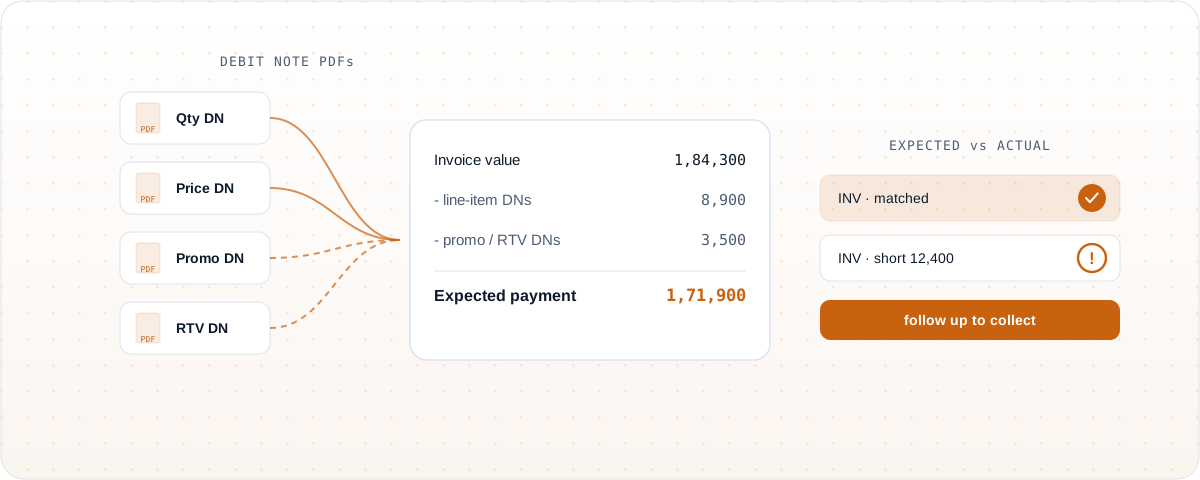
An Instamart settlement is a net figure with a story hidden behind it. The gross was reduced by a stack of debit notes, each with a code and an amount, and the settlement will not tell you why any of them was raised or which invoice it belongs to.
Reconciling it properly means reconstructing that story — computing what Instamart should have paid against each invoice, and comparing it to what actually arrived. Everything hinges on being able to read the debit notes and map them back.
The anchor is the expected payment, computed per invoice:
Expected payment = Invoice value − valid line-item DNs on its lines − valid overall DNs allocated to it
Actual received is then measured against this. A match closes the invoice; a gap is either an explained deduction or a dispute. The whole exercise is making that comparison possible, and that begins with the debit notes.
Instamart's settlement gives you the amount deducted. It does not give you the remark, and the remark is what makes the deduction reconcilable.
Downloading each debit note PDF and reading it is the step most manual processes skip and then regret. The PDF is where you find:
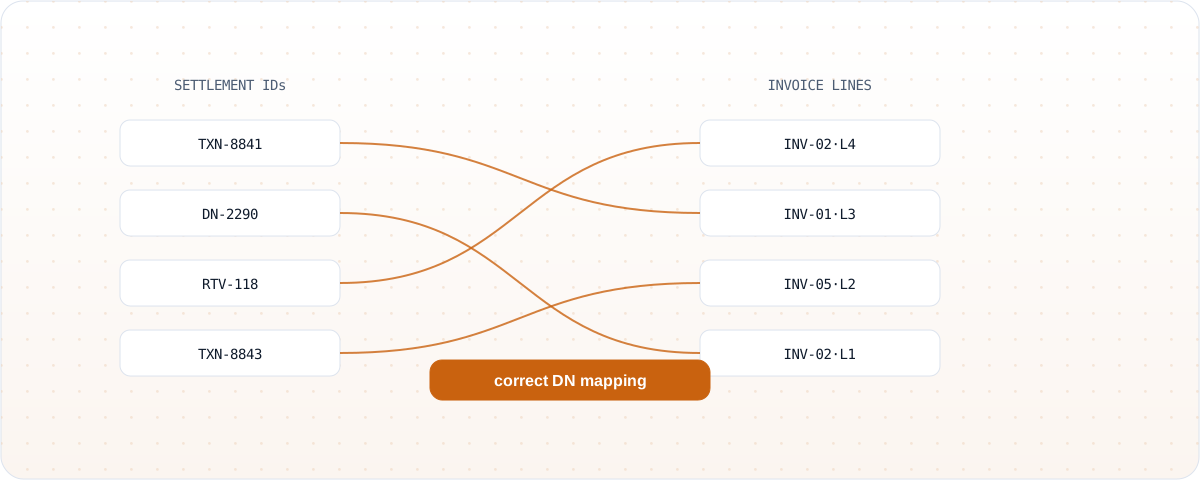
For these, the PDF confirms or contests the deduction against a specific line. For promo and RTV, the PDF is not just confirmation — it is the only thing that lets you map the deduction at all.
Promo DNs carry agreed marketing, funding and visibility costs, and Instamart frequently raises them across a campaign or a settlement rather than against one invoice. The settlement will show a promo deduction; it will not show which invoices it covers. The DN PDF names the scheme, the period, and the invoices or SKUs in scope — which is what allows it to be allocated correctly, and what lets you catch a promo DN raised beyond its agreed window or at the wrong percentage.
RTV DNs deduct the value of returned stock. The RTV document references the returned goods and the dispatch or invoice they originated from. Mapping it back is how you confirm the return happened and was valued right. An RTV DN that ties to no genuine return, or is priced wrongly, is contestable — with the document as evidence.
Miss this mapping and promo and RTV deductions simply shrink the payment, indistinguishable from legitimate ones. Do it, and each is either validated against its scheme or return, or flagged.
Even with debit notes mapped, Instamart payments do not line up one-to-one with invoices.
Reconciliation therefore links a set of payments to a set of invoices through a set of debit notes. An invoice is closed only when every payment touching it is summed, every DN mapped to it is netted, and the total is checked against the expected payment.
| Field | Where it comes from |
|---|---|
| Invoice value | Your invoice |
| Line-item DNs | DN PDFs, mapped to lines |
| Promo / RTV DNs | DN PDFs, allocated to invoice |
| Expected payment | Computed |
| Actual received | All payments touching the invoice |
| Variance | Expected − Actual |
Zero variance means correct and closed. A gap explained by a valid, mapped DN is closed and documented. A gap that is unmapped or invalid is a live dispute — surfaced as the settlement lands.
Datavio builds exactly this: it ingests each Instamart settlement, downloads and reads the debit note PDFs, maps promo and RTV notes back to their invoices, accumulates split and combined payments, and presents the expected payment against each invoice with the variance computed.
An unmapped deduction is an accepted deduction, whether or not it was correct — and the acceptance was never a decision, just a gap nobody could explain in time. Computing the expected payment per invoice, backed by the DN PDFs, converts that silence into specific, evidenced line items you can either close or chase.
That is the mechanism behind the reconciliation accuracy brands report across quick commerce. Not more effort — a defined expected figure per invoice, every deduction mapped to the document that justifies it, and every gap chased while the window is open.
Invoice value minus the valid line-item debit notes (quantity, price, tax) mapped to its lines, minus any valid overall debit notes (promo, RTV) allocated to it. The actual received amount is compared against this expected figure to identify variances.
The settlement summary shows only the deducted amount and a code, not the remark explaining why the DN was raised or which invoice it belongs to. That detail is in the DN PDF, and it is essential for validating the deduction and mapping promo and RTV DNs to the correct invoices.
Promo DNs are often raised at campaign or settlement level; the DN PDF names the scheme, period and invoices or SKUs in scope, enabling allocation to specific invoices. RTV DNs reference the returned goods and their originating dispatch or invoice, which is how the return is tied back and its value checked.
Yes. Settlements bundle several invoices net of their combined debit notes, so a payment must be split across the invoices it covers. Conversely, one invoice may be paid across multiple cycles, making reconciliation a many-to-many match of payments, invoices and debit notes.
When the variance between expected and actual payment maps to no valid debit note, or to a DN that is incorrect — such as a promo DN applied outside its agreed scheme window or an RTV DN with no corresponding genuine return. The DN PDF provides the supporting evidence.
Datavio reads each Instamart debit note, maps it to the invoice, and shows expected payment against actual.
Book a demo →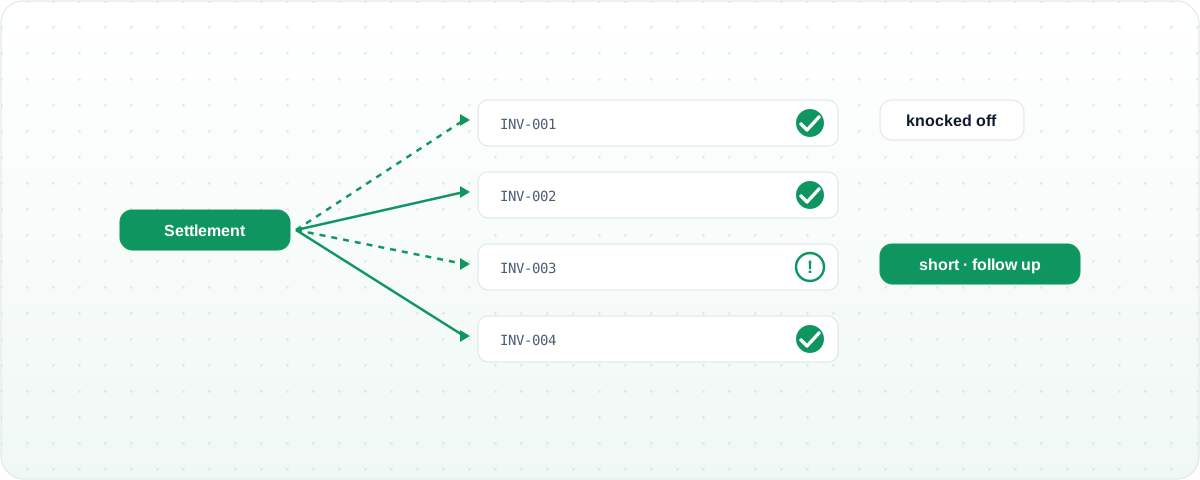
Blinkit pays you two different ways depending on the model, deducts through a stack of debit notes, and settles on its o
Instamart reconciliation is a mapping problem before it is a finance problem. The money arrives net of deductions, on a
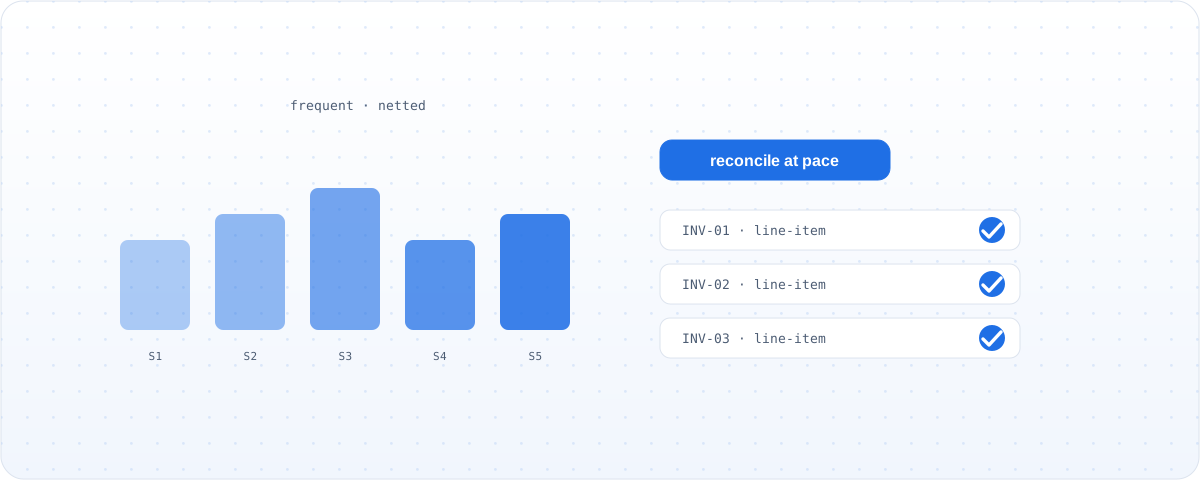
Zepto settlements are fast, frequent and netted. That cadence is a good thing for cash — but it means deductions accumul