
Three-way matching is standard. Four-way is where the money is — but the fourth document depends entirely on whether you are reconciling material or cash.
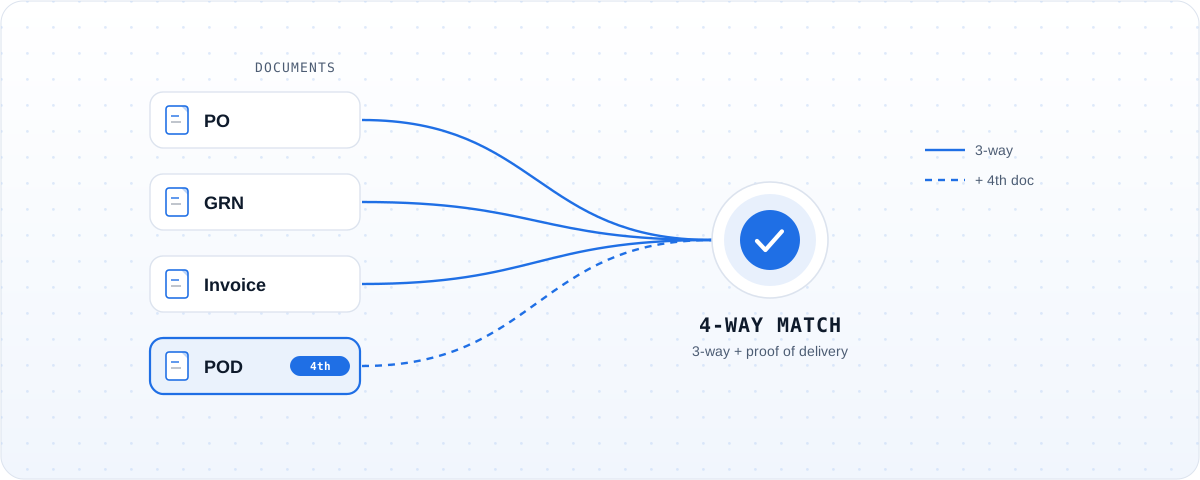
Ask two finance teams to define four-way matching and you will often get two different answers. Both may be right, because the fourth document depends on what you are trying to prove.
That ambiguity matters more than it sounds. Choose the wrong fourth document and you will build a control that looks rigorous but catches nothing.
Three-way matching compares three documents:
When all three agree at line level, you have reasonable assurance that you are paying for goods that were ordered and received at the price agreed. It is the baseline control in every ERP, and it catches the obvious problems: billed for 500 when 480 arrived, billed at ₹84 when ₹80 was agreed, billed for a SKU that was never ordered.
Three-way matching has one structural blind spot. It compares your records against your records. If goods left your warehouse and never arrived, or arrived somewhere they were not supposed to, a three-way match will not tell you. The GRN simply will not exist, and an absent document is a much harder thing to notice than a mismatched one.
Here is the distinction that most explanations skip.
If you are reconciling material flow, the fourth document is proof of delivery. The lorry receipt (LR) and POD establish that the consignment physically moved and was accepted at the destination, with a timestamp and a signature. This closes the gap between dispatch and receipt — the window in which shrinkage, misrouting and transit damage occur.
The chain becomes: PO → invoice → LR/POD → GRN. You ordered 5,000, you invoiced 5,000, the carrier moved 5,000, and 4,800 were booked in. Now the 200-unit gap has a location. It happened in transit, not in receiving, and you have a document that proves the consignment was handed over.
If you are reconciling cash flow, the fourth document is the payment record. The bank UTR, remittance advice and any debit or credit notes establish what actually landed in your account. This closes the gap between what was invoiced and what was received.
The chain becomes: PO → GRN → invoice → payment. You invoiced ₹4,20,000, ₹4,03,200 arrived, and a debit note explains ₹16,800 of it. Without the fourth match, that shortfall is just an unexplained variance, and unexplained variances get written off.
Most consumer brands need both. They are different reconciliations answering different questions, and running only one leaves half the leakage invisible.
| Control | Catches | Misses |
|---|---|---|
| 2-way (PO ↔ invoice) | Wrong SKU, wrong rate, wrong quantity billed | Anything about whether goods arrived |
| 3-way (+ GRN) | Billing for goods not received, short receipt | Where goods were lost; whether you were paid |
| 4-way material (+ POD/LR) | Transit loss, misrouting, delivery disputes | Payment shortfalls |
| 4-way cash (+ payment) | Short payment, unexplained deductions, rate-difference claims | Physical loss in transit |
The logic is not complicated. The volume is.
A brand processing a few thousand purchase orders a month is handling tens of thousands of line items, each needing four documents pulled from four different systems — the channel portal, the warehouse, the courier and the bank — and compared at line level within a dispute window that is often 30 to 45 days.
Miss the window and a legitimate claim becomes a write-off, regardless of how good your documentation was.
This is why matching tends to degrade into sampling. Teams check the large invoices and wave the rest through. The problem is that leakage is not concentrated in large invoices; it is spread thinly across thousands of small ones, which is exactly what makes it survive.
Yogabar was validating POs by hand — checking price, active SKU status, MRP and GST before punching each order into their ERP. Three to four hours every day, and errors were surfacing after the order was already in the system.
Automating ingestion and line-level validation cut order processing time by 90% and brought error detection to 100%, because every line is checked rather than the ones somebody had time for.
Across the brands we work with, matching runs on 100k+ purchase orders a month at 99% reconciliation accuracy. Neither number is achievable through diligence. They are a function of checking everything, every time, which is only possible when the documents assemble themselves.
If you are running three-way matching today and wondering whether the fourth match is worth it, run this test.
Take last quarter's short-supply incidents. For each one, ask whether you can produce a POD proving the consignment was handed over in full. If you cannot, you were never in a position to dispute the deduction — and every one of those became a silent write-off.
Then do the same for deductions. Take every debit note from the last quarter and ask whether it maps to a specific PO line with a documented reason. The ones that do not are your recovery pipeline.
Three-way matching compares the purchase order, goods receipt note and invoice to confirm that what was ordered, received and billed all agree. Four-way matching adds a fourth document: proof of delivery or lorry receipt when reconciling material flow, or payment records and UTRs when reconciling cash flow.
No. It depends on what is being reconciled. For material flow the fourth document is the POD or LR, which proves physical movement and acceptance. For cash flow it is the payment record, which proves what was actually received against the invoice.
Because all three documents are internal records. If goods never arrive, the GRN simply does not exist, and a missing document is far harder to detect than a mismatched one. Adding POD or LR data establishes that the consignment moved, which locates the gap.
All of them. Quantity and rate are agreed per SKU line, so header-level matching allows offsetting errors across lines to cancel out and go unnoticed.
See how Datavio matches PO, GRN, invoice and the fourth document automatically across your channels.
Book a demo →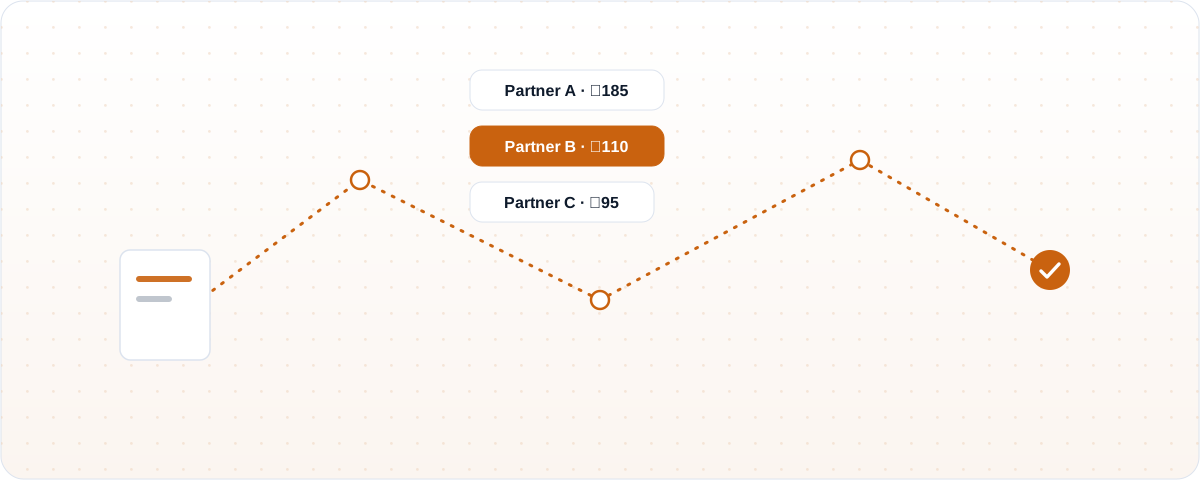
Scoring couriers on observed P90 delivery time and landed cost, so dispatch stops running on habit.
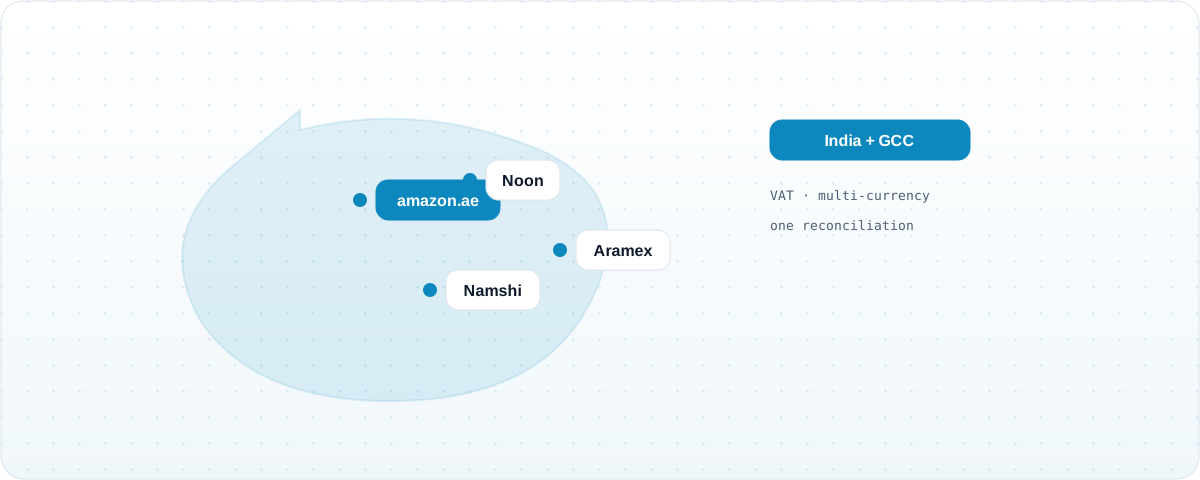
What changes operationally when you cross into the GCC — documentation, VAT, Aramex, and reconciling in more than one currency.
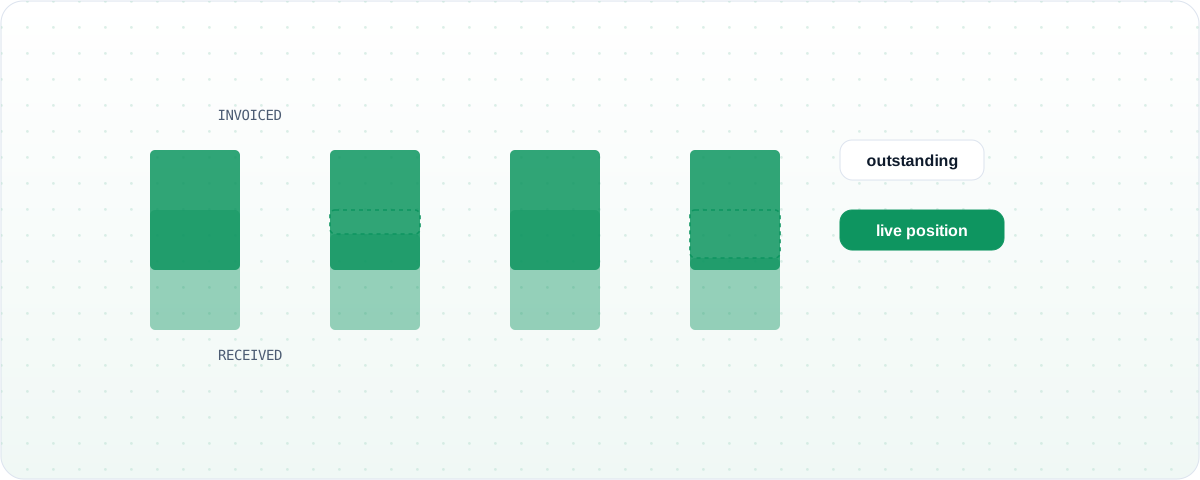
A finance view: why the close is too late to find problems, and what a live outstanding position actually requires.