
Most brands dispatch on habit. A recommendation workflow scores every option on observed delivery time and landed cost, then picks the cheapest one that still keeps the promise.
Most brands dispatch on habit. One courier is "the reliable one", another is "the cheap one", and the routing rule was set months ago in a spreadsheet nobody has revisited since.
The problem is that neither delivery time nor cost is stable. Carrier performance varies by lane, by pincode, by season and by day of week. Rate cards change. A partner who moves Bengaluru to Hyderabad in 36 hours may take five days into Guwahati. Meanwhile the channel's promise date is not negotiable — a breach means penalties, cancellations and a ranking hit.
So teams make one of two expensive mistakes, repeatedly.
Over-serving. Air-shipping an order a surface partner would have delivered comfortably inside the SLA, paying a premium for time you did not need.
Under-serving. Routing to the cheapest partner on a lane where they habitually miss, then absorbing the penalty, the return, or the lost sale.
Both are invisible in aggregate. They show up as a slightly worse contribution margin and a slightly worse fill rate, quarter after quarter.
Rather than applying a fixed rule, the workflow scores each shipment when it is ready to dispatch. It needs four inputs:
Then one constraint: among partners who can meet the promise date with acceptable confidence, choose the lowest landed cost.
Confidence is the word doing the work. An average TAT of 48 hours means nothing if the 90th-percentile TAT on that lane is six days. Score on percentile reliability, not averages.
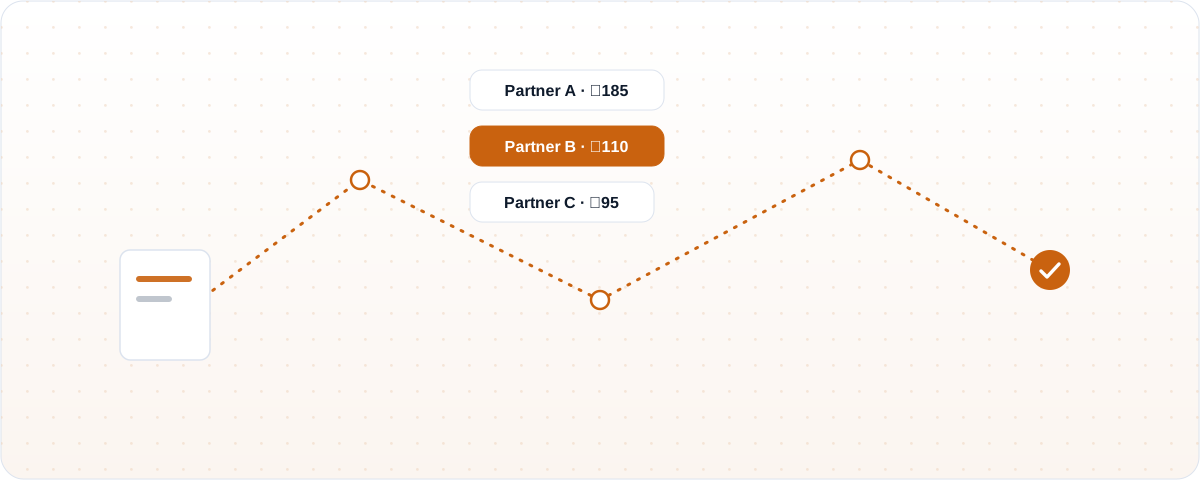
A 2 kg order, Bengaluru warehouse to a Pune pincode, marketplace promise date four days out.
| Partner | Observed P90 TAT | Landed cost | Meets promise? |
|---|---|---|---|
| Partner A (air) | 2 days | ₹185 | Yes |
| Partner B (surface) | 3 days | ₹110 | Yes |
| Partner C (surface) | 5 days | ₹95 | No |
A "cheapest" rule picks C and breaches the SLA. A "safest" rule picks A and overpays by ₹75. The workflow picks B — cheapest option clearing the promise date with a day of buffer.
Seventy-five rupees is trivial. Seventy-five rupees across 40,000 shipments a quarter is not.
The figures above are illustrative, to show the decision logic. Your own lane history replaces them.
This only works if TAT and cost data are current, which is where most attempts stall. The workflow pulls from:
Observed TAT is then computed from your own dispatch-to-POD timestamps, per lane, and refreshed continuously. The recommendation sharpens as history accumulates.
Five steps to build it:
Step four deserves emphasis. Most teams should run in recommend mode before auto-assign mode. Running the recommendation alongside the human decision for a few weeks builds trust in the scoring and, more usefully, exposes lanes where your rate card or serviceability data is stale — which is almost always the real problem underneath a bad dispatch decision.
Dispatch selection belongs to the same family as every other repetitive, data-dependent decision in operations: high frequency, rules-based, and badly suited to human judgement at volume.
The brands that automate this category of work see it in time returned rather than in a single dramatic saving. Bikaji recovered 60+ hours a week across order operations; Opptra 100+ hours a month. Fastrack, moving exception handling from manual checking to automated monitoring, cut response time by 75% — which matters here because a delayed consignment noticed on day one is recoverable and the same consignment noticed on day four is a breached SLA.
The freight saving is real but modest per shipment. The compounding gain is that nobody is making forty routing decisions a day on instinct.
Published transit time is a commitment; observed TAT is what actually happened on your shipments, on that specific lane, over a defined window. They frequently differ, and the gap tends to be widest on the lanes that matter most.
Start in recommend mode, where the workflow suggests a partner and the ops team decides. Running it alongside human decisions for a few weeks builds confidence in the scoring and surfaces stale rate-card or serviceability data before it drives live routing.
Manifests and delivery scans can be pulled from portals or emailed reports using an RPA step, and aggregators such as ClickPost normalise several carriers behind a single interface.
Yes. The same structure supports optimising for speed, for RTO risk, or for partner-mix commitments where you need to hold committed volumes with a particular carrier.
We will map a dispatch recommendation workflow against your channels, rate cards and delivery history.
Book a demo →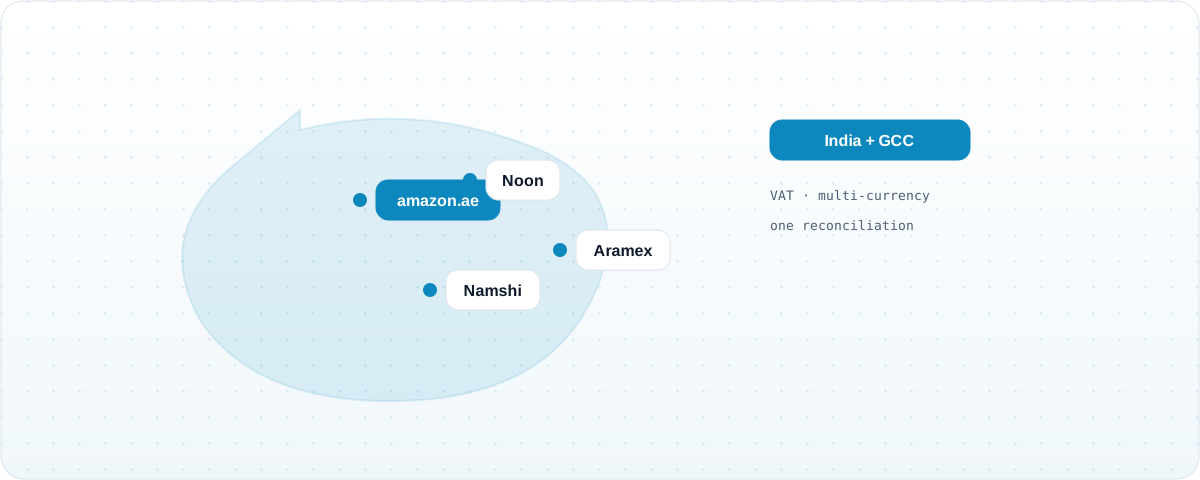
What changes operationally when you cross into the GCC — documentation, VAT, Aramex, and reconciling in more than one currency.
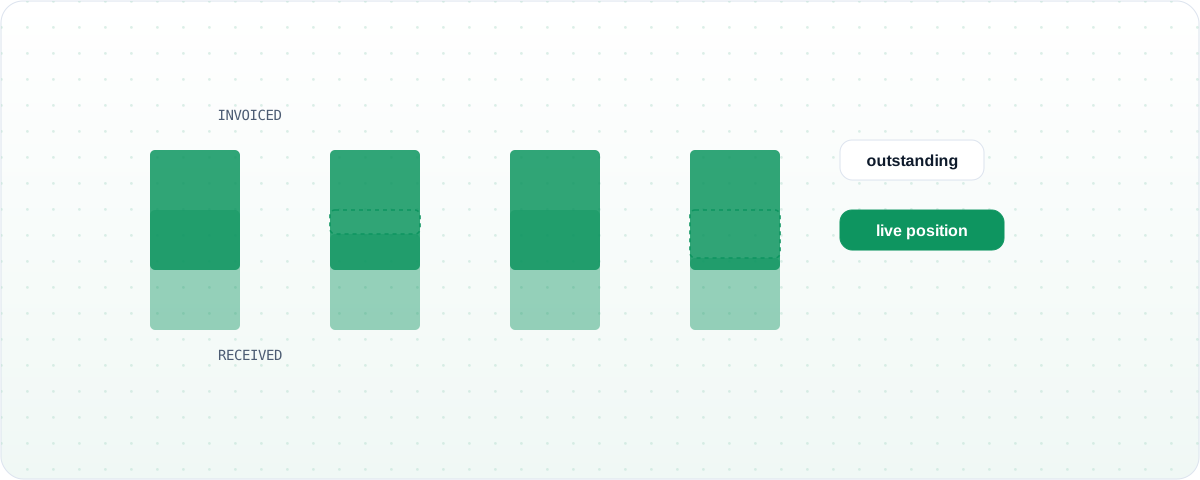
A finance view: why the close is too late to find problems, and what a live outstanding position actually requires.
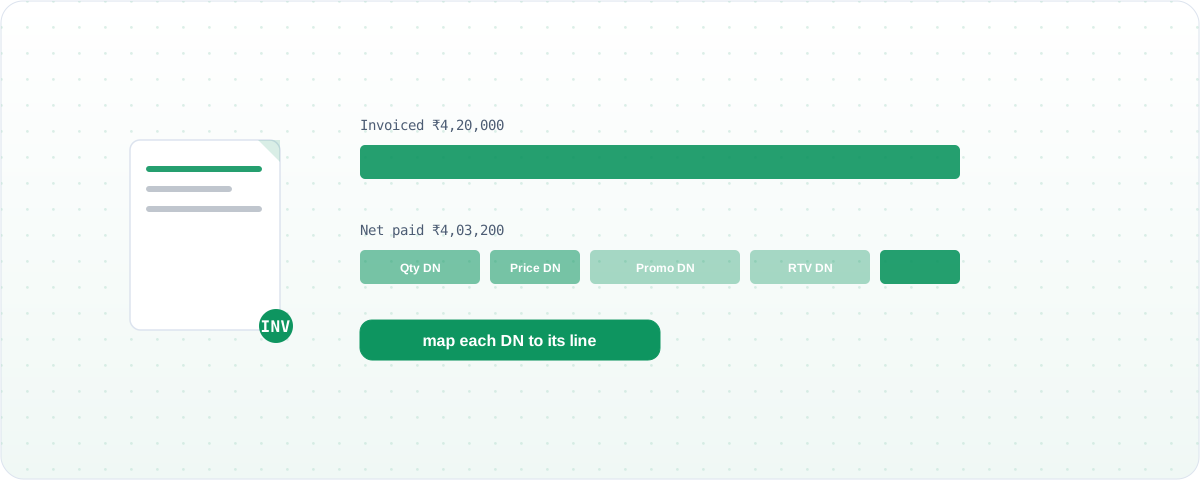
The main deduction categories, which are genuinely disputable, and the evidence pack each one needs before the window closes.