
Month-end is a reporting cadence, not an operating one. If your first accurate view of receivables arrives on the fifth of next month, every problem it reveals is already a month old.
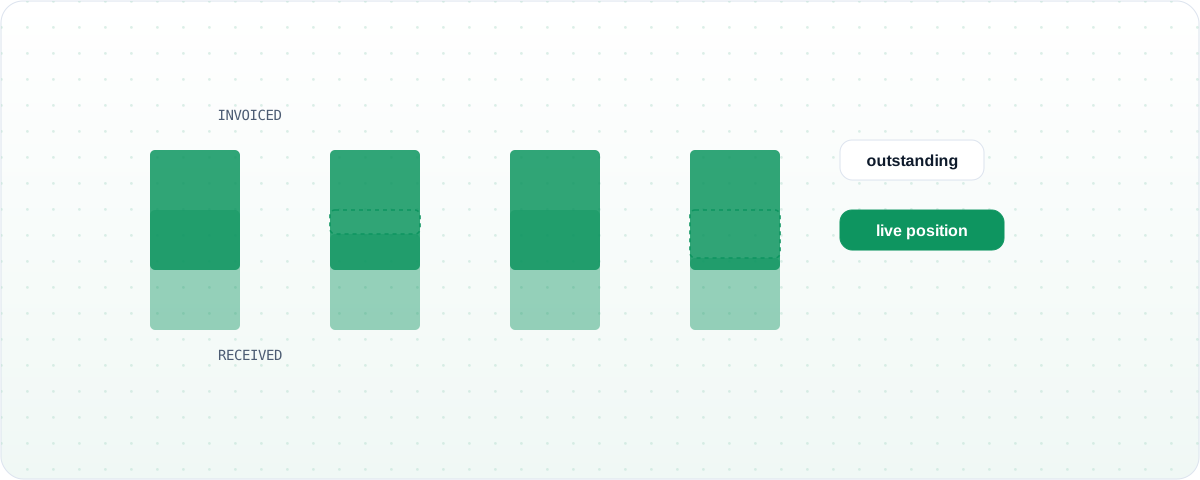
Ask a finance team what is outstanding and you will usually get a confident number from the ERP. Ask how much of it is genuinely collectable and the confidence drops.
The gap between those two answers is where working capital gets stuck. It is rarely a large single item. It is a long tail of invoices that are short-paid by a few percent, disputes nobody filed, and credit notes that were issued but never applied.
Month-end reconciliation is a control, and it works well as one. It is a poor detection mechanism, for a simple structural reason: by the time it runs, the average transaction in the period is already three weeks old.
For deductions with a 30-day dispute window, that is most of the window gone before anyone looks. For a short payment on the second of the month, it is 33 days of silence.
The information was available the whole time. It just was not assembled.
Three things have to be continuously true, and each is a small piece of plumbing rather than a system.
Payments matched to invoices at line level. A remittance arrives as one amount covering several invoices, net of deductions. Until it is split and allocated, you know cash came in but not what it settled. Matching on UTR and remittance advice, allocated per invoice line, is what turns a bank credit into a change in receivables.
Deductions mapped to a reason and a root document. An unexplained variance cannot be chased. A deduction attached to a PO line with a category — short shipment, rate difference, promotional — can be either disputed or accepted deliberately.
Credit and debit notes applied, not just issued. A surprising volume of trapped cash is notes sitting unapplied against open invoices. The money is agreed; the paperwork has not caught up.
Get those three right and the outstanding figure becomes derived rather than reported. Nobody updates it. It is simply what the numbers say at any moment.
Most brands track DSO. It is fine, but it is lagging and it blends together things with different causes.
A more useful pair:
Unreconciled cash. Money received that has not been allocated to a specific invoice line. This should trend to near zero. When it grows, matching has fallen behind, and every rupee in that bucket is a receivable you cannot age correctly.
Unexplained deductions. Deductions with no mapped reason code. This is your dispute pipeline, and its size is a direct measure of recoverable cash sitting untouched.
Both can be read daily. Neither requires a close.
Limese runs distribution for 25+ beauty and personal care brands across Nykaa, Zepto, Noon and Reliance Retail. Finance was reconciling invoiced-versus-GRN quantities by hand across all of it, which produced disputes and settlement inaccuracies as a matter of routine.
Automating that comparison took them to 99% reconciliation accuracy, with discrepancies flagged as they occurred. It also gave the purchasing side six months of forward planning visibility, because reliable historical data became available as a by-product.
Bikaji reached the same 99% accuracy on reconciliation into SAP, recovering 60+ hours a week of finance and ops time that had been going into chasing and matching.
Neither team changed their payment terms. They changed when they found out.
Most finance teams can answer "what is our DSO". Fewer can answer "what did we write off last year that we could have recovered", because write-offs of this kind rarely get a line of their own. They dissolve into net revenue.
If you want a rough figure, take last year's total deductions, estimate the share that fell into disputable categories, and multiply by the share where you could not have produced the evidence in time.
For most brands selling across quick commerce and marketplaces, the result is uncomfortable enough to justify fixing the plumbing.
Because dispute windows are typically 30 to 45 days from the settlement date. By the time a month-end close runs, the average transaction in the period is already around three weeks old, leaving very little of the window to assemble evidence and file.
Money received that has not yet been allocated to specific invoice lines. It should trend near zero. A growing balance means payment matching has fallen behind, and any receivable it relates to cannot be aged accurately.
Credit and debit notes are frequently issued but never applied against the open invoices they relate to. The commercial agreement exists, but the receivable stays open on the ledger until the note is applied.
Live reconciliation of invoiced, received, deducted and outstanding across every channel.
Book a demo →
Scoring couriers on observed P90 delivery time and landed cost, so dispatch stops running on habit.
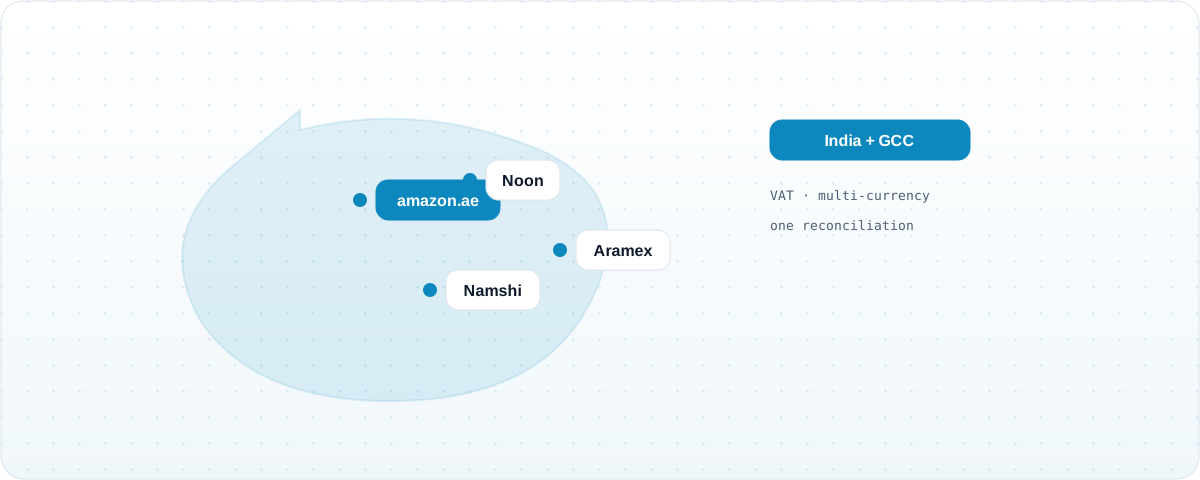
What changes operationally when you cross into the GCC — documentation, VAT, Aramex, and reconciling in more than one currency.
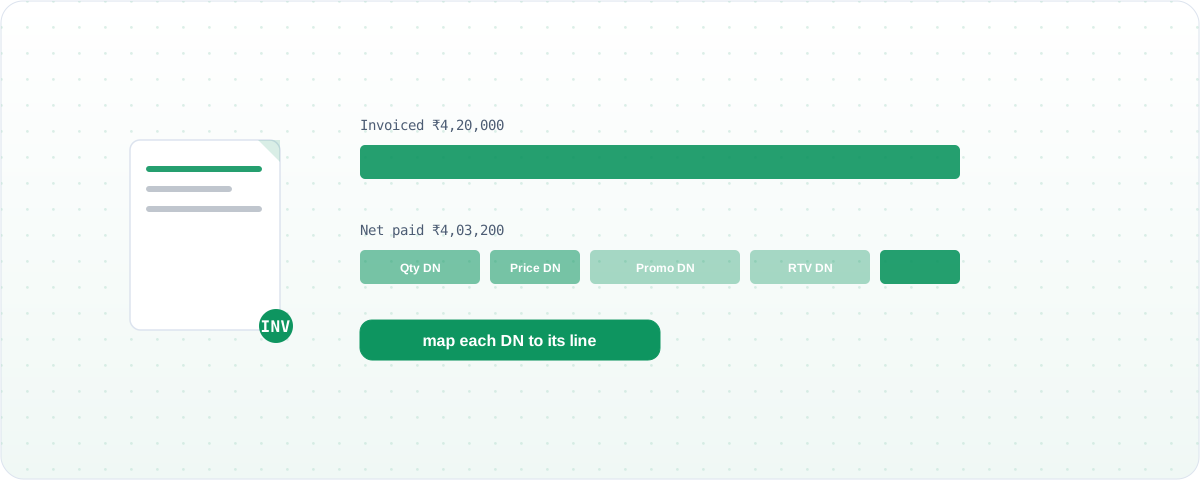
The main deduction categories, which are genuinely disputable, and the evidence pack each one needs before the window closes.