
The hard part of monitoring is not detection. It is deciding what deserves a notification at two in the afternoon and what can wait for the morning report.
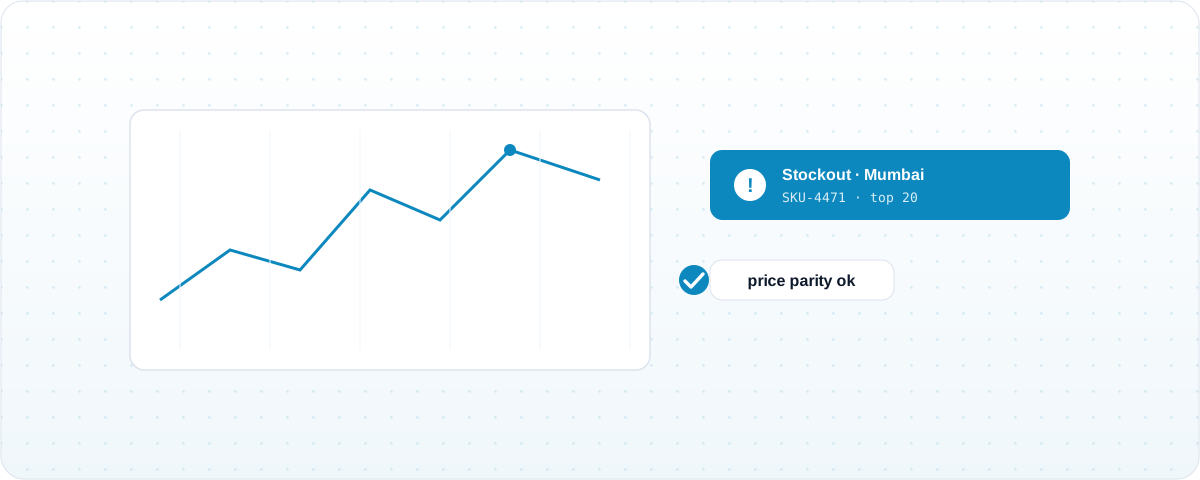
The first monitoring setup a brand builds usually works for about three weeks.
It detects everything, alerts on everything, and by week four the WhatsApp group has four hundred unread messages and everyone has muted it. Detection was never the problem. Signal-to-noise was.
So it is worth designing the alerting before the tracking.
Four signals cover most of what matters, and they have different urgencies.
Availability. Is the listing in stock, in this city, right now. Highest urgency, because every hour out of stock on a fast-moving SKU is unrecoverable revenue and, on most marketplaces, a ranking penalty that outlasts the stockout itself.
Price. Your listed price versus your intended price. Urgent when it breaks a price band, less so when it drifts within one.
Buybox and share of search. Whether you are winning the sale and whether you are findable. Slower-moving, better as a daily digest than an alert.
Competitor movement. Useful context, almost never urgent. This belongs in a report.
Collapsing all four into one alert stream is the single most common mistake, because it forces the most urgent signal to compete for attention with the least.
A threshold has three parts, and most teams only set the first.
The trigger. In stock or not, price outside band, availability below X%.
The scope. Per SKU, per city, per channel. Blanket thresholds are what generate noise — a 10% availability drop on your top SKU in Mumbai is an emergency, while the same drop on a long-tail SKU in a single pincode is not.
The persistence. How long the condition must hold before it counts. This one does most of the work. Marketplace APIs are noisy; a listing can report out of stock for six minutes during a sync and then recover. Requiring a condition to persist for, say, thirty minutes eliminates a large share of false alerts without meaningfully delaying real ones.
Tier your SKUs before you set any of this. Top 20% by revenue get tight thresholds and fast escalation. The long tail goes into a daily digest. Applying one policy to all of them is what makes monitoring unusable at scale.
An alert that reaches somebody who cannot act on it is worse than no alert, because it trains people to ignore the channel.
Route by cause, not by severity:
Then escalate on time, not on repetition. If a top-SKU stockout is unacknowledged after two hours, it should move up a level. Re-sending the same message every fifteen minutes achieves nothing except muting.
WhatsApp for things that need action within hours. Email for things that need action today. A dashboard for everything else.
This sounds obvious and is routinely ignored, usually because WhatsApp is easy to wire up and so everything ends up there. Within a month it has the same status as a spam folder.
Fastrack manages thousands of SKUs across Amazon, Flipkart, Myntra and Nykaa, with pricing bands that vary by SKU, channel and day. Manual checking could not keep up, and violations were being found after the damage.
With automated monitoring — pincode-level availability tied to their IMS, and price scraping matched against internal offer sheets — they cut stockouts by 20%, improved price parity by 15%, and cut response time on exceptions by 75%. Brand compliance sits at 95%.
The response-time number is the one that compounds. Everything else follows from noticing early.
Start narrower than feels satisfying.
The temptation is to switch everything on at once because the connectors make it easy. Resist it. A monitoring system's usefulness is determined entirely by whether people still read it in month three.
Tier SKUs by revenue and apply different thresholds to each tier, require conditions to persist before alerting to filter out API noise, route alerts by cause to the person who can act, and escalate on elapsed time rather than by re-sending the same message.
Around thirty minutes for fast-moving SKUs. Marketplace APIs frequently report brief out-of-stock states during syncs that resolve on their own, and requiring the condition to hold removes most false positives without materially delaying genuine ones.
Usually not. Availability issues are supply chain or planning problems, while price band breaches belong to the category or key account owner. Routing by cause keeps each channel relevant to its audience.
City-level availability and price tracking across every marketplace, with alerts routed to the people who can act.
Book a demo →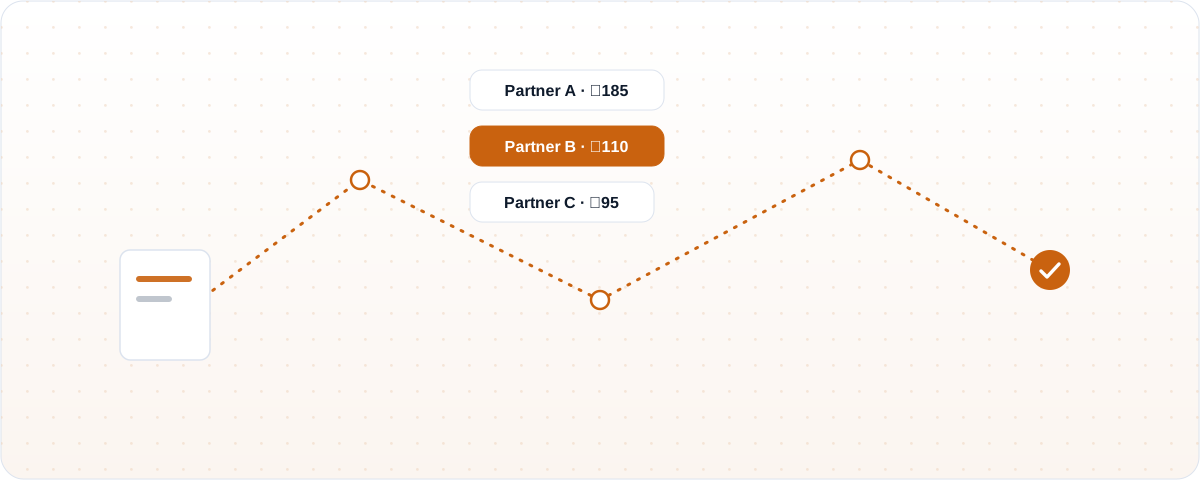
Scoring couriers on observed P90 delivery time and landed cost, so dispatch stops running on habit.
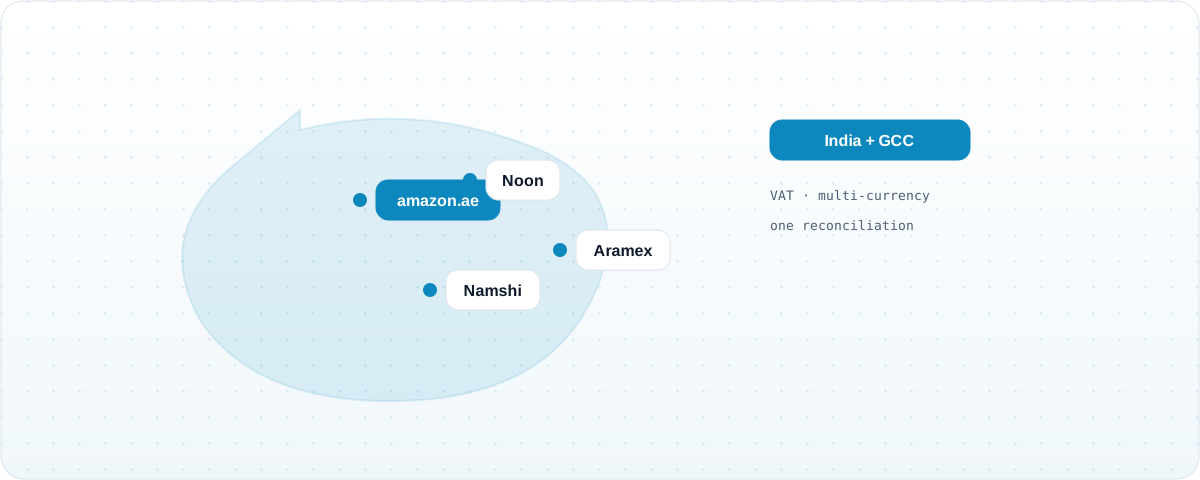
What changes operationally when you cross into the GCC — documentation, VAT, Aramex, and reconciling in more than one currency.
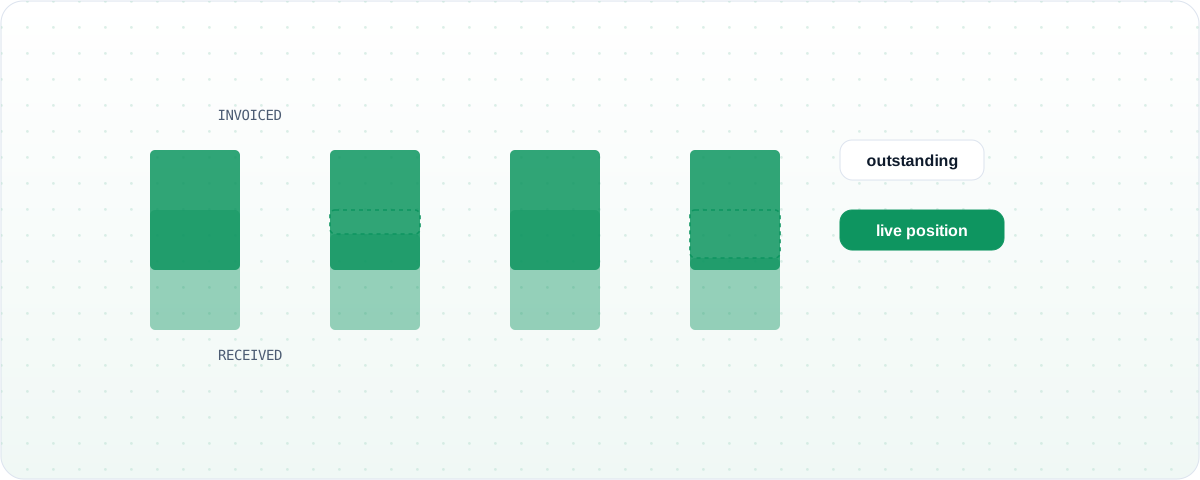
A finance view: why the close is too late to find problems, and what a live outstanding position actually requires.