
Deductions are not fraud and they are not all disputable. Knowing which category you are looking at, and what evidence it needs, is most of the recovery.
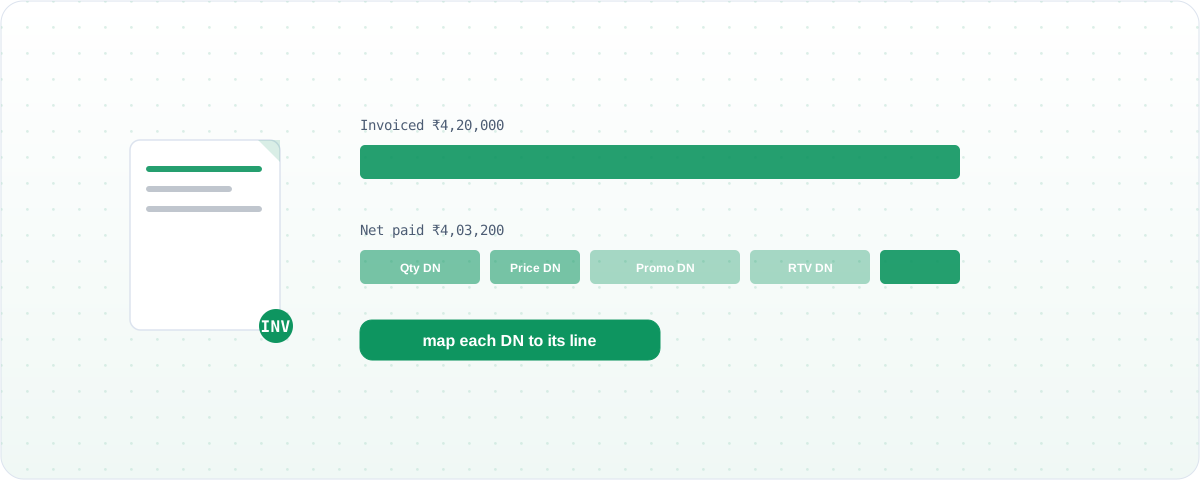
Open any consumer brand's marketplace settlement and you will find a line item that reduces the payment, references a code nobody recognises, and is attached to no purchase order.
Multiply that across channels and months and you have a number that most brands treat as a cost of doing business. Some of it genuinely is. A meaningful share is not.
The difference between the two comes down to whether you can produce evidence inside the dispute window, which is usually 30 to 45 days and starts from the settlement date rather than the date you noticed.
Deductions are not one thing, and lumping them together is why recovery rates stay low.
Short shipment. The channel claims fewer units arrived than were invoiced. Highly disputable if you have POD showing full delivery, and near-impossible to dispute without it. This is the category where four-way matching pays for itself.
Damage and expiry. Units rejected at receiving or found damaged. Partly disputable. Damage in transit is a carrier claim, not a channel one, and the two get confused constantly. Near-expiry rejections usually come down to your own dispatch discipline.
Rate difference. The channel paid at a different rate than you invoiced. Very often recoverable, because the root cause is frequently a promotional price that expired, a rate revision applied from the wrong date, or a slab misapplied. You need the agreed rate card with effective dates.
Promotional and scheme deductions. Agreed marketing costs, funding contributions, visibility charges. Mostly legitimate, but worth checking against what was actually agreed — over-application beyond the agreed period or percentage is common and almost never flagged by the channel.
Logistics and handling. Fulfilment fees, storage, returns processing. Usually contractual. Check the rate, not the principle.
TDS and TCS. Statutory. Not disputable, but must be reconciled against Form 26AS, and mismatches here create tax problems rather than commercial ones.
GST input credit mismatches. Where the channel's GSTR filings do not match your records. Not a deduction as such, but it blocks input credit, which has the same effect on cash.
Three things, in order of importance.
Evidence, assembled before you need it. A short-shipment dispute needs the invoice, the manifest, the LR and the POD. If you start gathering those after the deduction appears, you are already two weeks into a 30-day window and one of the four documents will turn out to sit with a carrier who takes a week to respond.
A mapped root cause. A deduction attached to a specific PO line with a documented reason gets resolved. A deduction described as "settlement adjustment ₹43,200" gets argued about and eventually dropped.
Timeliness. This is the one that quietly kills recovery. Most brands discover deductions during month-end reconciliation, which means the average deduction is already three weeks old before anyone looks at it. Discovering them at settlement rather than at close roughly doubles the usable window.
Recovery is a process, not a project. Four stages.
Stage four's second half matters more than it looks. Deductions you accept still tell you something. A recurring damage deduction from one distribution centre is an operational signal. A rate difference that repeats monthly means your rate master and theirs disagree, and every month you do not fix it, you pay again.
Bikaji were reconciling PO, invoice and POD manually across channels, with payment delays and disputes as the result. Automating it delivered 99% reconciliation accuracy and freed 60+ hours a week.
Limese, distributing across Nykaa, Zepto, Noon and Reliance, reached the same 99% reconciliation accuracy on invoiced-versus-GRN quantities — the comparison that underpins any short-shipment dispute.
Across brands on the platform, reconciliation runs against 100k+ purchase orders a month. The recovery does not come from arguing harder. It comes from arguing sooner, with the documents already attached.
Pull one quarter of deductions from your largest channel. Sort by value. Then, for the top twenty, answer one question each: can I produce the four documents that would prove this deduction wrong?
Count how many times the answer is no. That count, not the deduction total, is the thing to fix first — because the deductions themselves will keep coming, and the only variable you control is whether you are ready for them.
Short shipment claims where you hold POD showing full delivery, rate differences where the agreed rate card and effective dates disagree with what was paid, and promotional deductions applied beyond the agreed period or percentage. Statutory deductions such as TDS and TCS are not disputable but must be reconciled.
Typically 30 to 45 days, and the clock generally starts from the settlement date rather than from when the deduction is noticed. Finding deductions at settlement instead of at month-end close roughly doubles the usable window.
The invoice, the dispatch manifest, the lorry receipt and the proof of delivery, matched to the specific PO line. Without POD establishing that the consignment was handed over in full, a short-shipment claim is very difficult to contest.
Because the pattern is operational information. A recurring damage deduction from one distribution centre or a monthly rate difference indicates a root cause that will keep costing you until it is fixed.
We will map your last quarter of deductions to their root PO lines and show you which are recoverable.
Book a demo →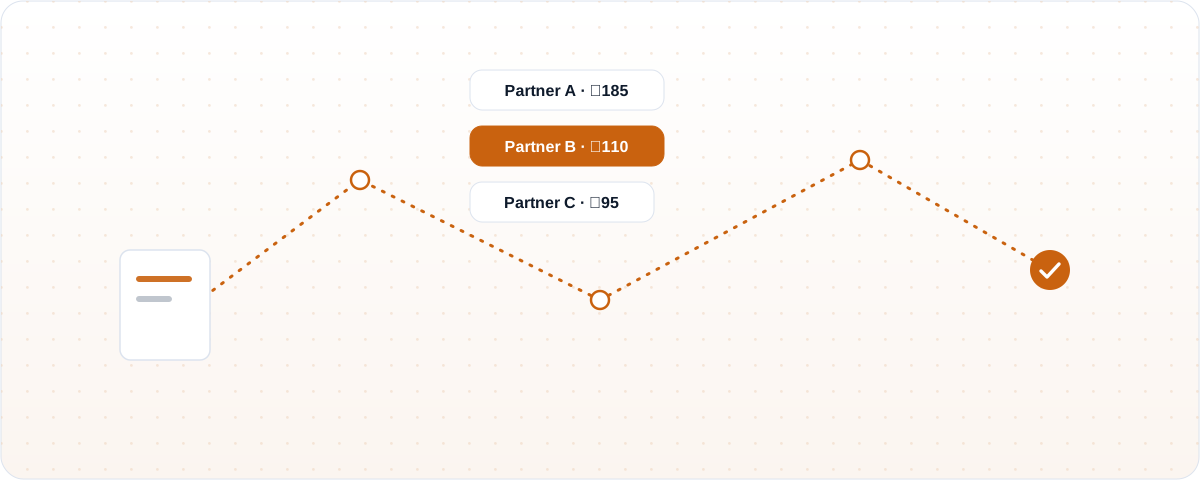
Scoring couriers on observed P90 delivery time and landed cost, so dispatch stops running on habit.
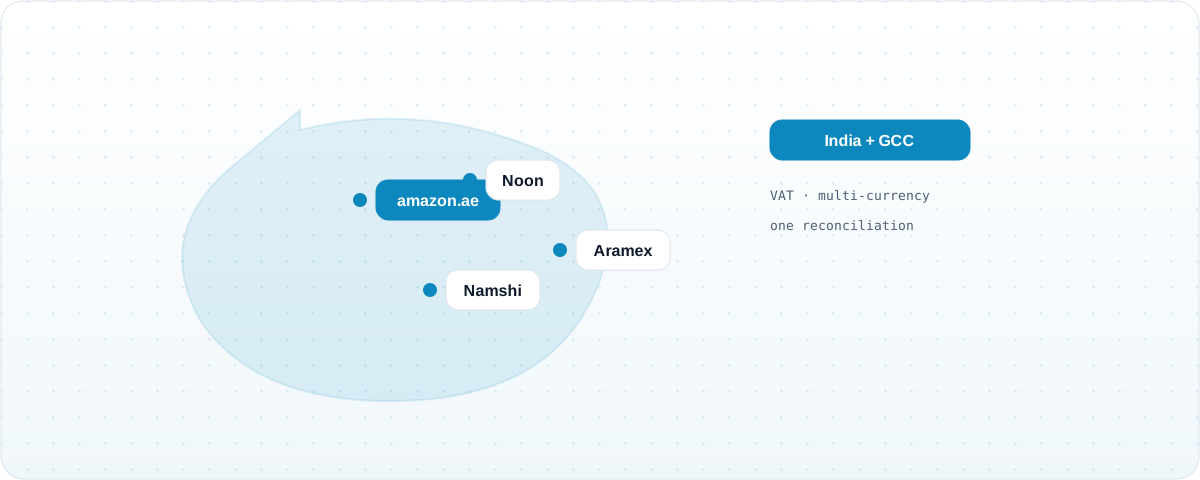
What changes operationally when you cross into the GCC — documentation, VAT, Aramex, and reconciling in more than one currency.
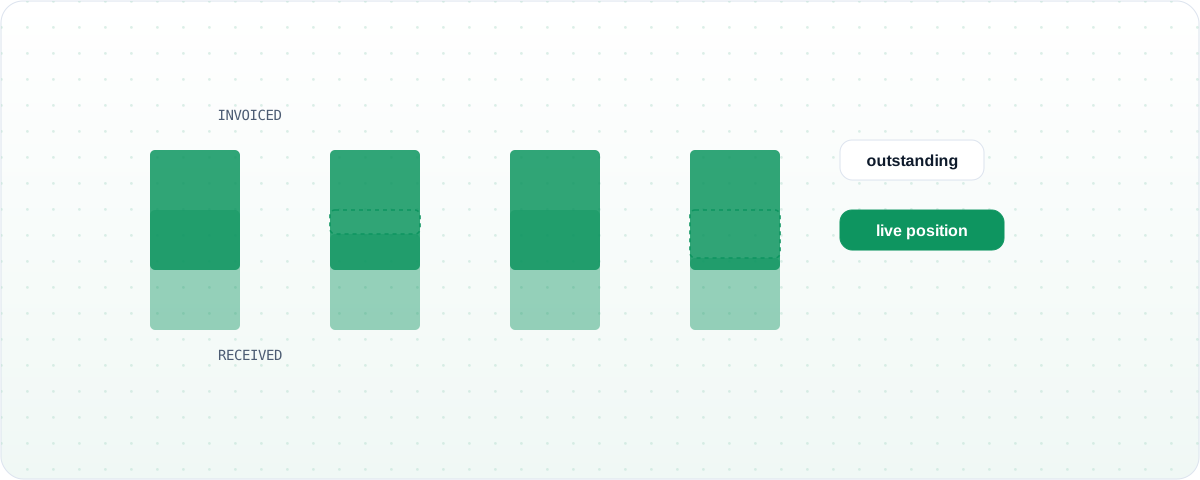
A finance view: why the close is too late to find problems, and what a live outstanding position actually requires.