
You shipped 5,000. The GRN says 4,800. Before you raise a debit note, work out which of five places those 200 units went — because the answer changes who pays.
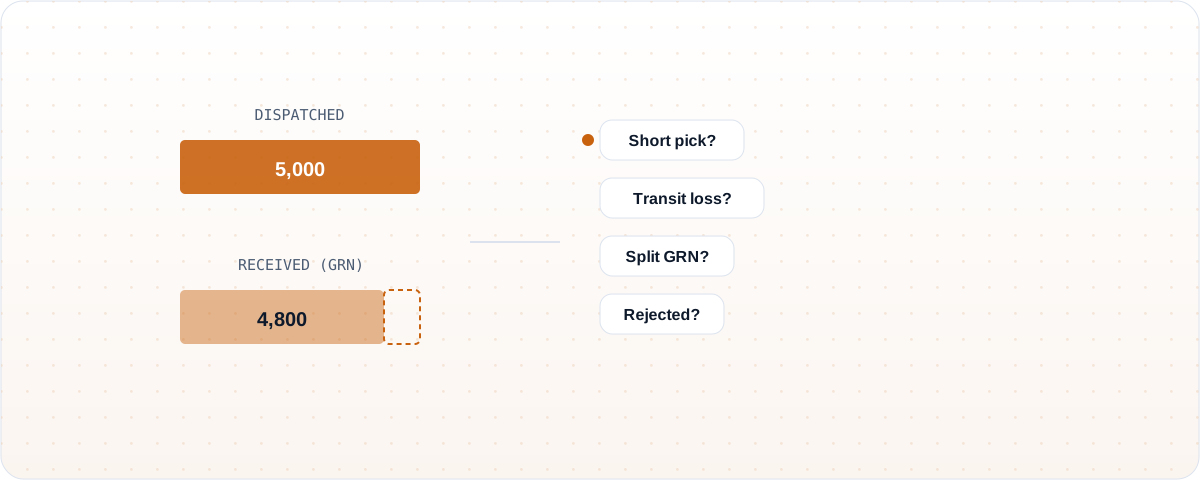
Two hundred units are missing. The dispatch says 5,000, the GRN says 4,800, and somebody has to decide what to do about it before the dispute window closes.
The instinct is to raise a debit note. Often that is right. But roughly a third of the short-supply cases we see are not the channel's fault at all, and disputing those costs you credibility on the ones that are.
So it is worth spending ten minutes on diagnosis first.
1. They never left. The pick was short. The invoice was raised against ordered quantity rather than picked quantity, so your own paperwork claims 5,000 while 4,800 physically went onto the vehicle. This is more common than most brands admit, and it is entirely internal.
Tell-tale sign: the LR weight or carton count matches 4,800, not 5,000.
2. They were lost or damaged in transit. The consignment left complete and arrived short. Carton count on the POD will usually disagree with the manifest.
Tell-tale sign: POD carton count is lower than dispatch, or the POD carries a damage remark.
3. They arrived but were rejected at the gate. Near-expiry stock, damaged outers, or a labelling issue. These units physically arrived and were then refused, which is a different commercial conversation from units that never arrived.
Tell-tale sign: a gate-entry record exists but the GRN quantity is lower, often with a rejection reason.
4. They arrived and were received late. Nothing is missing. The receiving location booked 4,800 on Tuesday and the balance on Friday, and you looked on Wednesday.
Tell-tale sign: a second GRN against the same PO line appears a few days later. This is the most common false alarm.
5. They were received but not booked correctly. Wrong SKU mapping at the destination, or units posted against a different PO. The stock is there; the paperwork points elsewhere.
Tell-tale sign: an unexplained over-receipt on a different line or PO around the same date.
Work backwards through the documents. Each one narrows the window.
Only when all five come back clean do you have a genuine short receipt worth disputing.
This is exactly the sequence that four-way matching automates. Without POD in the chain, questions two and three are unanswerable, and most teams skip straight from "we shipped 5,000" to "they received 4,800" with a three-day hole in the middle that nobody can account for.
Case four — split GRNs — deserves special attention because it generates so much wasted work.
A brand looks at open POs on Wednesday, finds forty with short receipts, and spends the afternoon drafting debit notes. By Friday, thirty of those have closed themselves through a second GRN. The work was pointless, and worse, a few debit notes went out that now have to be withdrawn.
The fix is a waiting rule: do not treat a receipt as short until the PO has been closed by the channel, or until a defined number of days past the last GRN. Encoding that one rule removes most of the noise.
Limese were reconciling invoiced-versus-GRN quantities manually across Nykaa, Zepto and Reliance Retail, with disputes and inaccurate settlements as the result. Automating the comparison took them to 99% reconciliation accuracy and surfaced discrepancies as they happened rather than at month end.
The accuracy number matters less than the timing. A short receipt identified on day two is a conversation. The same short receipt identified on day fifty is a write-off.
Not total shrinkage. Track unexplained shrinkage — short receipts that survived all five diagnostic questions.
That figure is your genuine transit and receiving loss, and it is the one you can actually take to a carrier or a channel partner with a straight face. Everything else is a process problem wearing a shrinkage costume.
Compare the POD or LR carton count against the dispatch manifest. If the POD matches dispatch but the GRN is lower, the units arrived and the gap is at receiving — either a rejection or a booking error. If the POD is already short, the loss happened in transit.
Until the PO is closed by the channel, or a defined number of days after the last GRN. Split GRNs are common, and a large share of apparent short receipts resolve themselves when the balance quantity is booked a few days later.
Short receipts that remain after ruling out short picking, split GRNs, gate rejections and mapping errors. It is the genuine loss figure, and the only one worth taking to a carrier or channel partner.
Datavio matches dispatch, POD and GRN quantities line by line so gaps have a location, not just a number.
Book a demo →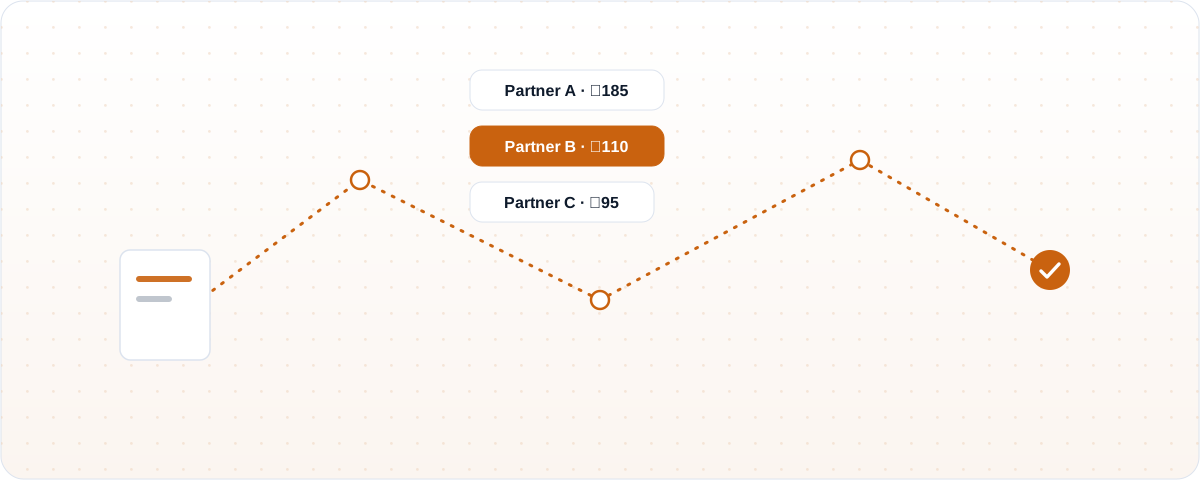
Scoring couriers on observed P90 delivery time and landed cost, so dispatch stops running on habit.
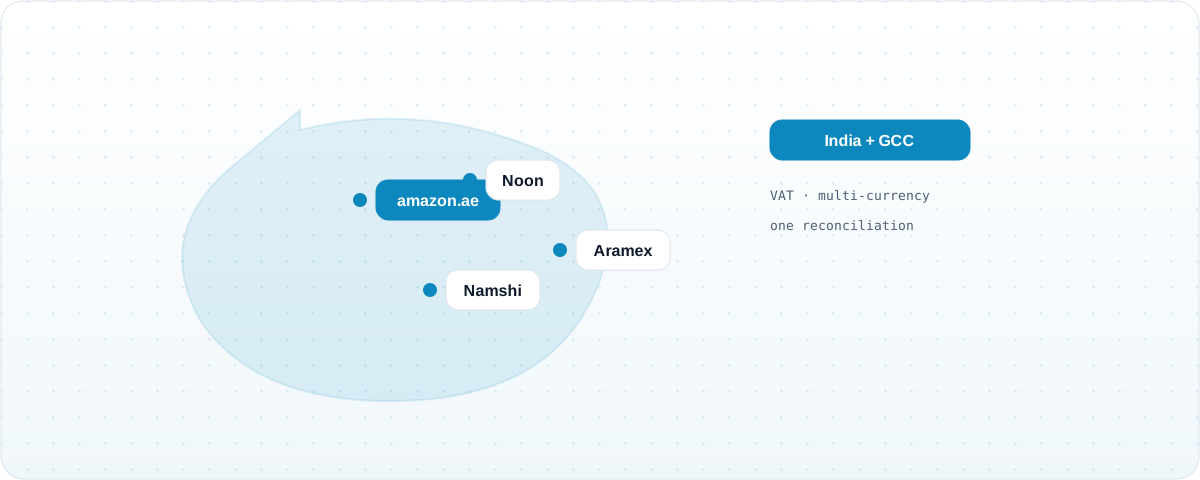
What changes operationally when you cross into the GCC — documentation, VAT, Aramex, and reconciling in more than one currency.
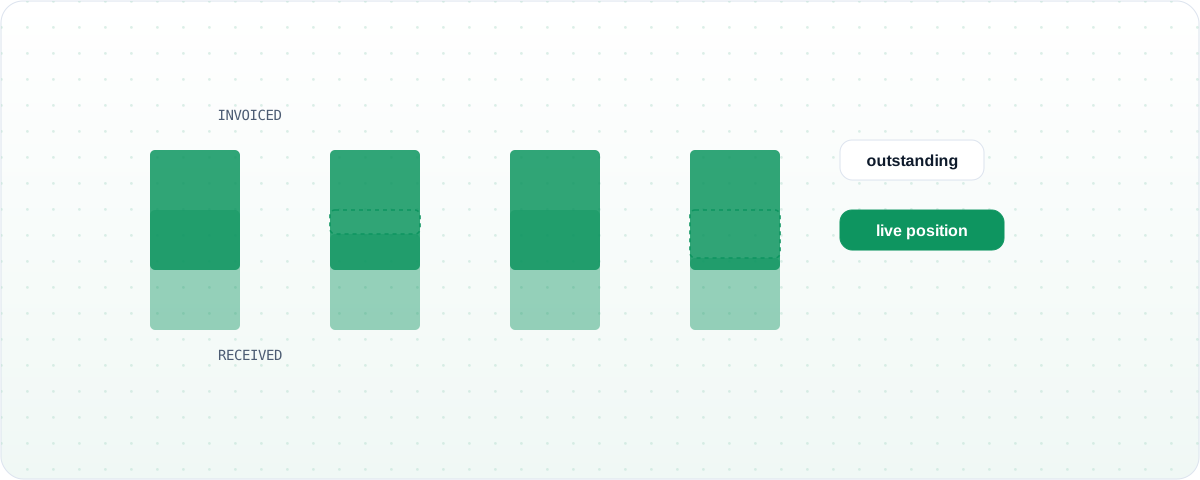
A finance view: why the close is too late to find problems, and what a live outstanding position actually requires.