
Order to cash is not one delay. It is seven small ones stacked end to end, and only two of them are usually worth fixing.
"How long does it take us to process a PO?"
Most ops leads answer with a single number, and the number is almost always wrong — not because they miscounted, but because a PO timeline is not one duration. It is seven, and they behave very differently.
Some stages are elastic and shrink under pressure. Others are fixed by physics or by somebody else's calendar. Knowing which is which decides whether a process improvement is worth the effort.
Here is the full journey, with the ranges we typically see across brands selling on quick commerce and marketplaces.
| Stage | Typical duration | Elastic? |
|---|---|---|
| 1. PO receipt to visibility | 0–24 hrs | Yes |
| 2. Validation | 30 min – 4 hrs | Yes |
| 3. ERP entry | 15 min – 2 hrs | Yes |
| 4. Pick, pack, dispatch | 1–3 days | Partly |
| 5. Transit | 1–7 days | No |
| 6. GRN posting | 0–5 days | Partly |
| 7. Invoice to payment | 15–60 days | Partly |
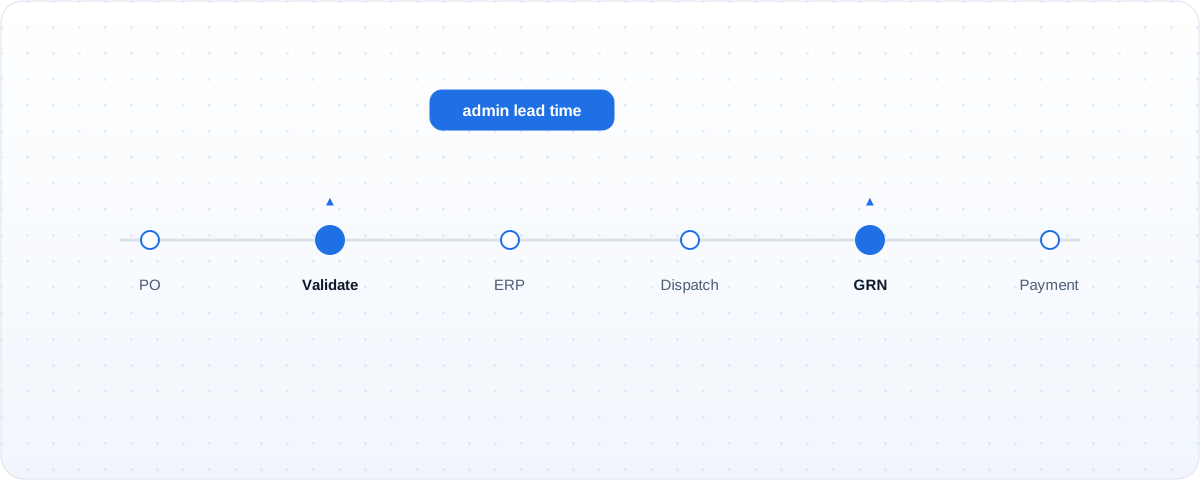
Stages one through three are administrative. Nothing physical happens. And in most brands, they consume between one and two full days of the cycle before a single carton moves.
That is the part worth attacking first.
A PO arrives. It might arrive in a vendor portal, as an email attachment, on WhatsApp, or in a DMS. The clock starts, but the brand does not know it has started.
We have seen POs sit unopened for a full working day, not through negligence but because the person who checks that particular portal was on leave and nobody else had the login. It is the least sophisticated failure in the whole chain and one of the most expensive, because in quick commerce a day of the fulfilment window is a meaningful share of it.
The fix is not discipline. It is removing the human from the retrieval step entirely.
Every line needs checking against your masters: is the SKU active, is the rate the agreed rate, is the MRP right, is the GST slab correct, is the case size right.
Do this after the order enters the ERP and you have created a second problem, because now the correction requires an amendment, a conversation with the buyer, and sometimes a credit note. Yogabar were spending three to four hours a day on exactly this, and finding errors only once orders were already in the system.
Validating before ERP entry cut their processing time by 90% and took error detection to 100%. The sequence mattered as much as the automation.
Rekeying a validated order into SAP, Tally or Zoho adds no information. It exists because two systems do not talk.
It is also where transcription errors enter, which is particularly annoying because the data was correct thirty seconds earlier.
Pick-pack-dispatch responds to warehouse capacity and cut-off times. Transit is largely fixed by lane and carrier, though dispatch routing can influence it more than most teams assume.
GRN posting is the sleeper. The goods have physically arrived, but the receiving location has not booked them in — sometimes for days. Until that GRN exists, your invoice cannot be validated and your payment clock has not really started. Chasing GRNs is one of the most common uses of an ops team's afternoon, and one of the easiest to automate away.
Fifteen to sixty days, and it is the stage most brands treat as immovable.
Some of it genuinely is — payment terms are payment terms. But a meaningful share of the delay is self-inflicted: invoices that cannot be validated because the GRN is missing, deductions raised without a mapped reason, and disputes that sit unanswered because nobody assembled the evidence pack in time.
Bikaji's finance and ops teams were losing hours weekly to exactly this kind of chasing across their channels. Automating PO, invoice and POD reconciliation into SAP recovered 60+ hours a week and took reconciliation accuracy to 99%.
If you want a number that actually means something, stop measuring end-to-end cycle time. Measure stage one to stage three as a single block — call it administrative lead time — and track it separately from everything physical.
It is the part you fully control. It is usually one to two days. And in most brands it can be brought under thirty minutes without touching the warehouse, the carrier or the payment terms.
Then measure the GRN gap: days between delivery and GRN posting, by channel and location. That number tells you where your payment cycle is quietly starting late.
Everything else is either physics or somebody else's contract.
The administrative portion — receipt, validation and ERP entry — should run in under an hour, and can be under thirty minutes when automated. Manual processes typically take one to two days for the same work. End-to-end order to cash is dominated by transit and payment terms, so it is a less useful improvement target.
An invoice generally cannot be validated until the corresponding GRN exists, because there is nothing to match the billed quantity against. Every day the GRN sits unposted is a day the payment clock has not genuinely started.
The administrative block: receipt, validation and ERP entry. It is fully within your control, requires no change from carriers or channel partners, and usually contains one to two days of removable delay.
We will map your current PO timeline stage by stage and show you where the days are going.
Book a demo →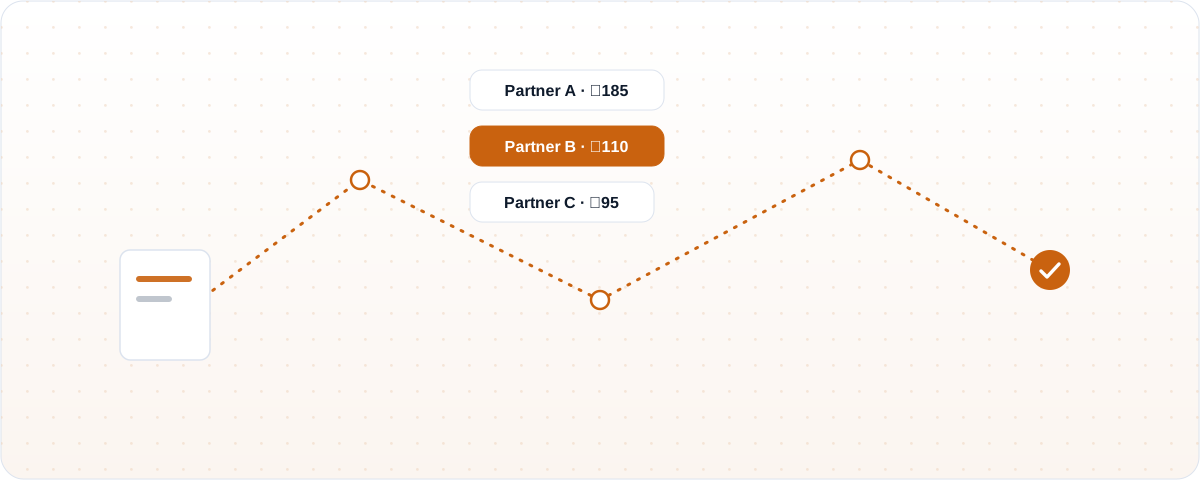
Scoring couriers on observed P90 delivery time and landed cost, so dispatch stops running on habit.
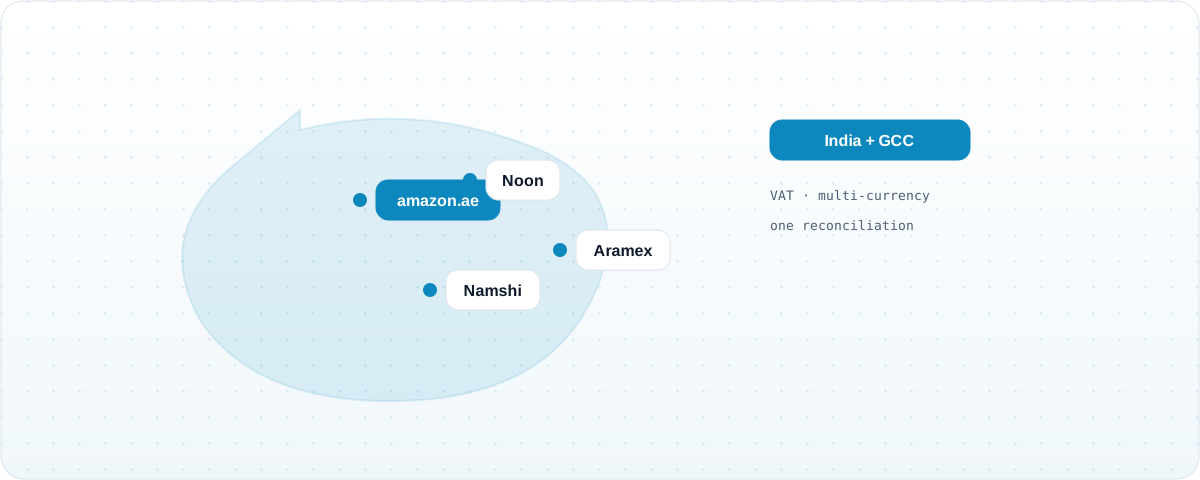
What changes operationally when you cross into the GCC — documentation, VAT, Aramex, and reconciling in more than one currency.
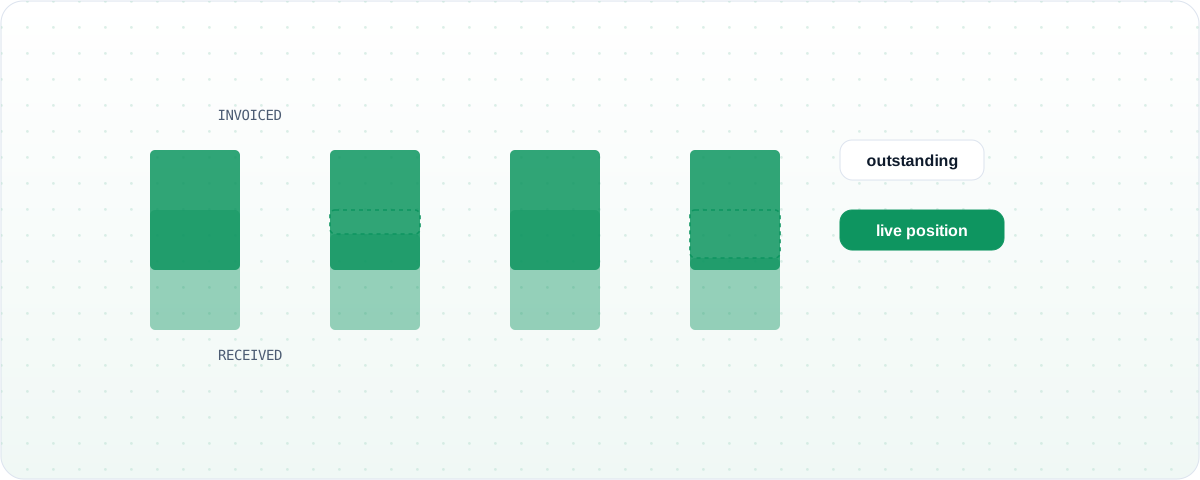
A finance view: why the close is too late to find problems, and what a live outstanding position actually requires.